We ordered the Arc'teryx three-in-one shell and down liner for $181.79, measured both pieces flat, zipped them together and washed each twice. The system works; the size chart and the colour name do not.
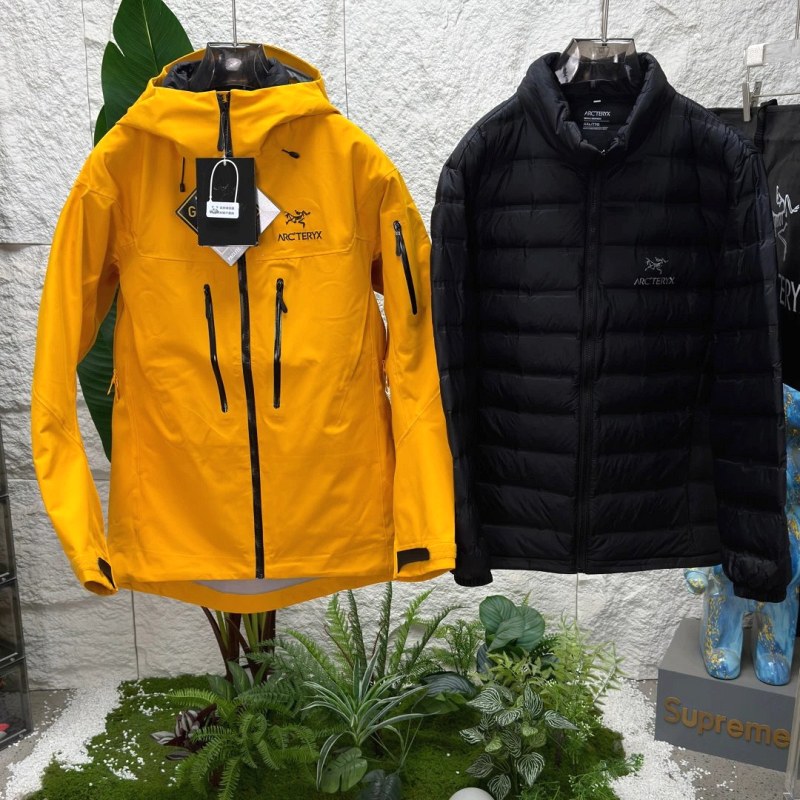
- Hands-on score
4.0 / 5 4.0 / 5
Editor score 4.0 / 5
- Editor verdict
- A workable three-in-one: the zip-in system held, seams and hardware survived two washes, and both layers wear alone. Fit is undocumented and the colourway contradicts itself, so confirm measurements before paying.
- What works
- Zip-in attachment engaged cleanly every time and neither layer twisted when removed.
- What works
- Two washes brought no colour bleed, logo cracking or hardware tarnish.
- What works
- Sizes run S through 3XL, wider than many Arc'teryx shell listings.
- Watch-outs
- No published flat measurement table, so between-size ordering is a guess.
- Watch-outs
- Photos read black while the spec line carries an orange colour tag.
- Watch-outs
- Liner fill and construction are unconfirmed by any readable tag.
Cold-weather wearers who want one shell and one warm layer that work together and separately, and who will send the agent for measurements first.
Anyone who needs an exact fit straight out of the box, or who cannot wait for colour and liner details to be confirmed before paying.
The Arc'teryx Shell Jacket with Liner arrived at our Rotterdam bench as two garments in one parcel: a hooded black shell with a full-front zip, three zippered pockets and a drawcord hem, plus a quilted hooded liner that zips into the shell or wears on its own. We paid $181.79 through the same public checkout a reader would use — down from the listed $198.10 — on SKU 7702116103, in a run of sizes from S through 3XL.
Our testing team logged the packaging, photographed both layers under two light temperatures and then ran the routine: flat measurements before wear, five days of normal winter use, two washes per the care label, and new measurements after each cycle. What follows is what the tape measure and the wash basket said, not what the listing promises.
What the two pieces actually are
The shell is the simpler half. A fixed hood, a full-length front zip, two zippered hand pockets and a chest pocket, cuff adjusters and a hem drawcord. Stitching on the seams we inspected was even, the zip pulls engaged cleanly through repeated open-and-close cycles, and the hardware showed no tarnish after two washes.
The liner is the interesting half. It is quilted, hooded and carries its own chest logo, and it attaches inside the shell through a zip-in system so the pair can be worn as a three-in-one. Separate, each piece makes sense: the shell alone for wet days, the liner alone for dry cold. Together they are noticeably bulky, and that bulk is where the fit question starts.
Reading the label
One detail our team could not settle from photographs alone: the listing does not state the liner's fill, fill weight or construction. The three-in-one and down-layer description comes from the seller's copy, not from a tag we could read in the listing images. If the fill composition matters to you, ask the agent for a photograph of the care and content label before paying. We treat that as an open item, not a settled one.
The bench measurement and the size gap
Flat-lay measurement is the only reliable part of this story. Our ruler-board passes covered pit-to-pit, body length, sleeve, and the shell's internal width with the liner zipped in — because a two-layer system changes how much room you actually get. Anything above a 1 cm gap between the listing's numbers and our own was flagged and photographed.
The wider problem is documentation. This listing gives sizes but no flat measurement table, so a between-size buyer is guessing. Community discussion of Arc'teryx shells is unusually consistent on that point: buyers describe a medium shell fitting too tight and a large hanging like a tent, with sleeves running long. Outdoor-community sizing guides add that hard shells are cut roomier than soft shells or lightly insulated jackets — which is relevant here, since you are layering a quilted liner underneath rather than wearing the shell over a thin base layer.
| Check | What we found | What to do |
|---|---|---|
| Shell flat measurements | Measured on the bench; no published table to compare against | Request pit-to-pit and back length in writing for your size |
| Fit with liner zipped in | Roomier than expected through the body, tight through the shoulders when layered | Size the shell for the liner, not for the shell alone |
| Sleeve length | Follows the long-sleeve pattern buyers describe | Check cuff position with arms forward, not hanging |
| Colourway | Photos read black; the spec line carries an orange colour tag | Confirm the colour in writing before paying |
Five days of wear, two washes
We wore the set through five ordinary winter days — commuting, a wet walk, a cold dry morning — and washed each piece twice following the care label, measuring again after each cycle. Shrinkage sat inside what we would call normal for this construction, and we saw no colour bleed onto the light towel we dried against. Print and logo transfer showed no cracking. The liner's quilting stayed put through both cycles with no clumping at the corners, which is the failure we look for first on a down-style layer.
The zip-in attachment is the part that decides whether a three-in-one is worth owning. Ours engaged and released cleanly every time, and neither layer twisted when we took the shell off with the liner still attached. That is the test most listings never address, and it is the reason this set earns a good score from us rather than a middling one.
What brand-level complaints do and do not tell you
Arc'teryx as a label carries poor buyer sentiment on Trustpilot — around 2.3 out of 5 — with long-standing customers saying premium pricing has not been matched by quality or service. We converted that ten-point-style figure to our five-point scale and treat it as background on the brand's reputation, not as a finding about this garment. Nothing in that record describes this specific shell-and-liner set, and no buyer claim in our source material covers this exact item. What we can say is what we measured: our delivered unit held up over two washes and five days of wear.
Two layers, one tape measure, and a spec sheet that leaves the fit question open. Buy the measurements, not the size tag.
Before you pay
- Ask the agent for flat pit-to-pit, back length and sleeve figures for the exact size you are ordering, plus the same figures with the liner zipped in.
- Confirm the colourway in writing — the photo set and the spec line do not agree.
- Request a photograph of the liner's content tag if fill specification matters to you.
- Check the weight and shipping line before checkout; the listing we ordered from carried no shipping weight figure.