Overall Color Palette This set of images revolves around black, white, gray, and brown, with touches of blue trim, dark blue prints, and beige pants, presenting a low-saturation, autumn-winter casual streetwear vibe. Dark knitwear and black tops anchor the visual weight, white long sleeves and printed tees brighten the scene, and the brown knit polo adds warmth to the palette. 
Editor score 4.2 / 5
Overall Color Palette
This set of images revolves around black, white, gray, and brown, with touches of blue trim, dark blue prints, and beige pants, presenting a low-saturation, autumn-winter casual streetwear vibe. Dark knitwear and black tops anchor the visual weight, white long sleeves and printed tees brighten the scene, and the brown knit polo adds warmth to the palette.
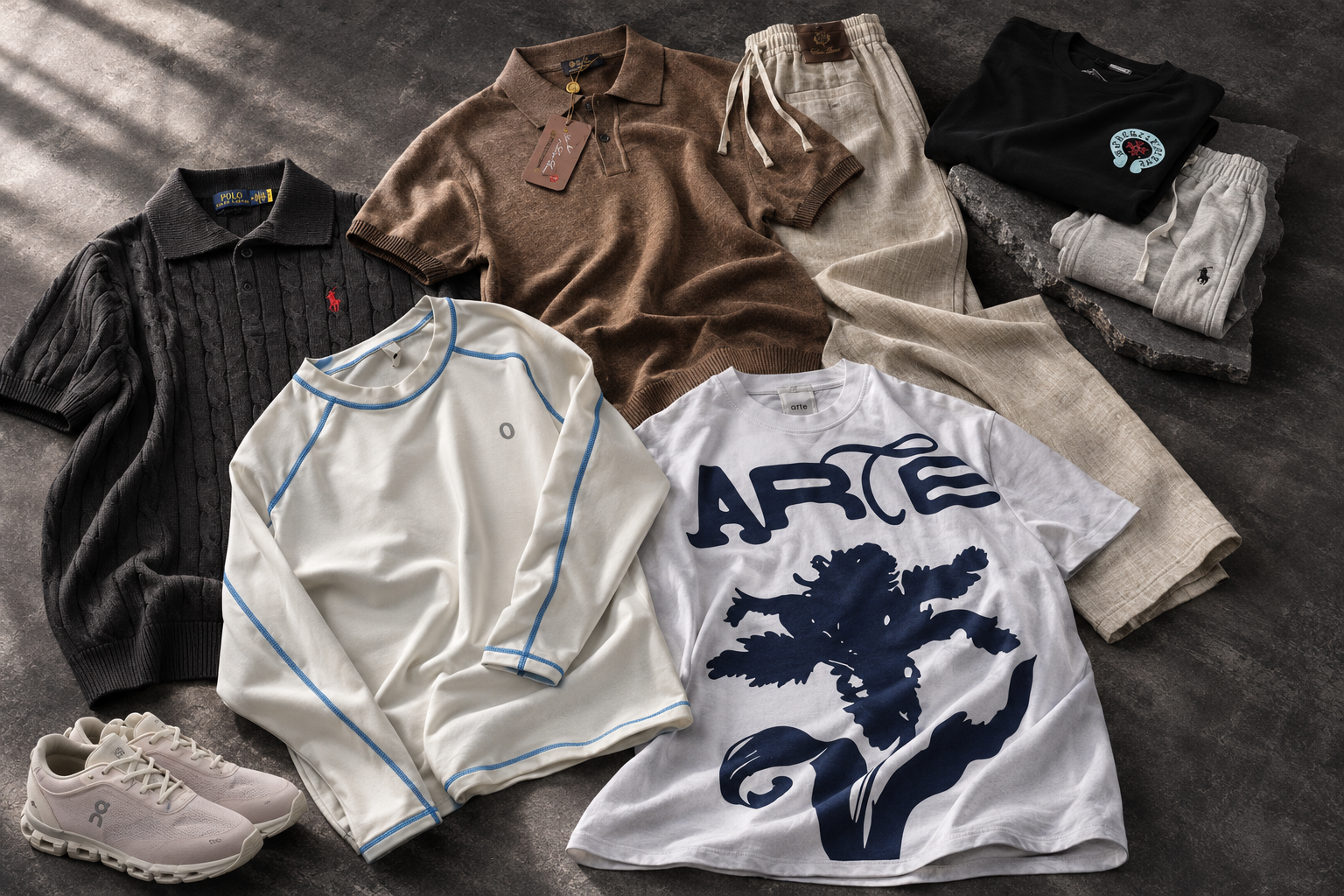
To make outfits easier to combine, use white, gray, and black as base colors, then choose one piece in brown or beige as the main color. Blue trim or dark blue patterns work well as small accents; avoid adding too many high-saturation colors, or the overall harmony will be weakened.
Three Practical Color Directions
Black, White, and Gray Base Combination
Black tops, gray knits, and white tees are great for a clean, everyday layered look. Black defines the silhouette, white brightens, and gray softens the contrast between the two extremes. When paired with light-colored sneakers, the shoe color can echo the white top for a lighter feel.
Brown and Beige Warm-Toned Combination
A brown short-sleeve knit polo with beige pants looks softer and suits smart-casual or weekend outings. The light-colored pants balance the heaviness of the top; for shoes, opt for white, off-white, or subtle gray to avoid competing colors.
Dark Tops and Patterned Pieces Combination
Black tops or gray knits can be paired with tees or shorts featuring bold patterns. In this case, the patterned piece should be the focal point, with the rest of the outfit kept plain. The dark blue print in the image works well with black, white, or gray, preserving a streetwear feel without looking cluttered.
Arranging Layers by Details
The image shows several structural details that can differentiate styling focus:
- The gray knit's cable pattern and collar add strong texture, ideal for pairing with clean white or black bottoms.
- The brown polo's short sleeves and ribbed edges keep the look light, great with loose pants or simple shoes.
- The white long-sleeve top's blue contrast trim is a clear decorative line; echo it with dark blue patterns or small blue accessories.
- The white printed tee has a large dark blue graphic; when styling, reduce other bold patterns to keep the focus on the upper body.
- The beige drawstring pants' light color and draped lines help balance dark tops and make the layout feel more relaxed.
How to Display Clothing More Clearly
This flat lay uses a staggered arrangement: knits, polo, and pants are placed behind, with white long sleeves and printed tees in the foreground, and sneakers at the bottom left, creating a visual path from tops to shoes. This layout displays multiple items at once, but keep adequate spacing to avoid overlapping sleeves, pant legs, or graphics.
When styling, arrange items as "main piece, supporting piece, finishing piece": first place a patterned top as the focal point, then fill the surrounding space with solid knits and pants, and finally stabilize the edges with shoes or small accessories. If garments have tags, embroidery, sleeve pockets, or drawstrings, position these details toward the camera to minimize information loss from folding.
Dark garments work well at the edges or back of the frame, light garments in the middle or foreground, creating depth through light and shadow. Shoes don't need to match any single garment exactly; as long as their brightness relates to the light areas in the image, they'll help anchor the composition.
Information to Note When Styling
Some garments have wrinkles or are not laid flat, making textures and silhouettes appear incomplete. Small labels, embroidery, and brand logos shouldn't be used alone to infer material, fit, or wear performance. To plan actual outfits, first confirm garment length, shoulder width, pant length, waist construction, and the full placement of graphics when laid flat.
From a visual styling perspective, this set works best around the sequence: "dark base, light accents, brown/beige warmth, blue echoes." Keep one main patterned piece, two to three solid basics, and finish with understated shoes to maintain clarity and coordination.