Overall Color Palette This flat-lay features white, blue, black, dark gray, and silver gray as the main colors, with orange and rose-red fabric as background accents. The overall visual transitions from bright to deep, clearly layered, suitable for referencing the arrangement of primary, secondary, and accent colors in sportswear combinations. 
Editor score 4.2 / 5
Overall Color Palette
This flat-lay features white, blue, black, dark gray, and silver gray as the main colors, with orange and rose-red fabric as background accents. The overall visual transitions from bright to deep, clearly layered, suitable for referencing the arrangement of primary, secondary, and accent colors in sportswear combinations.
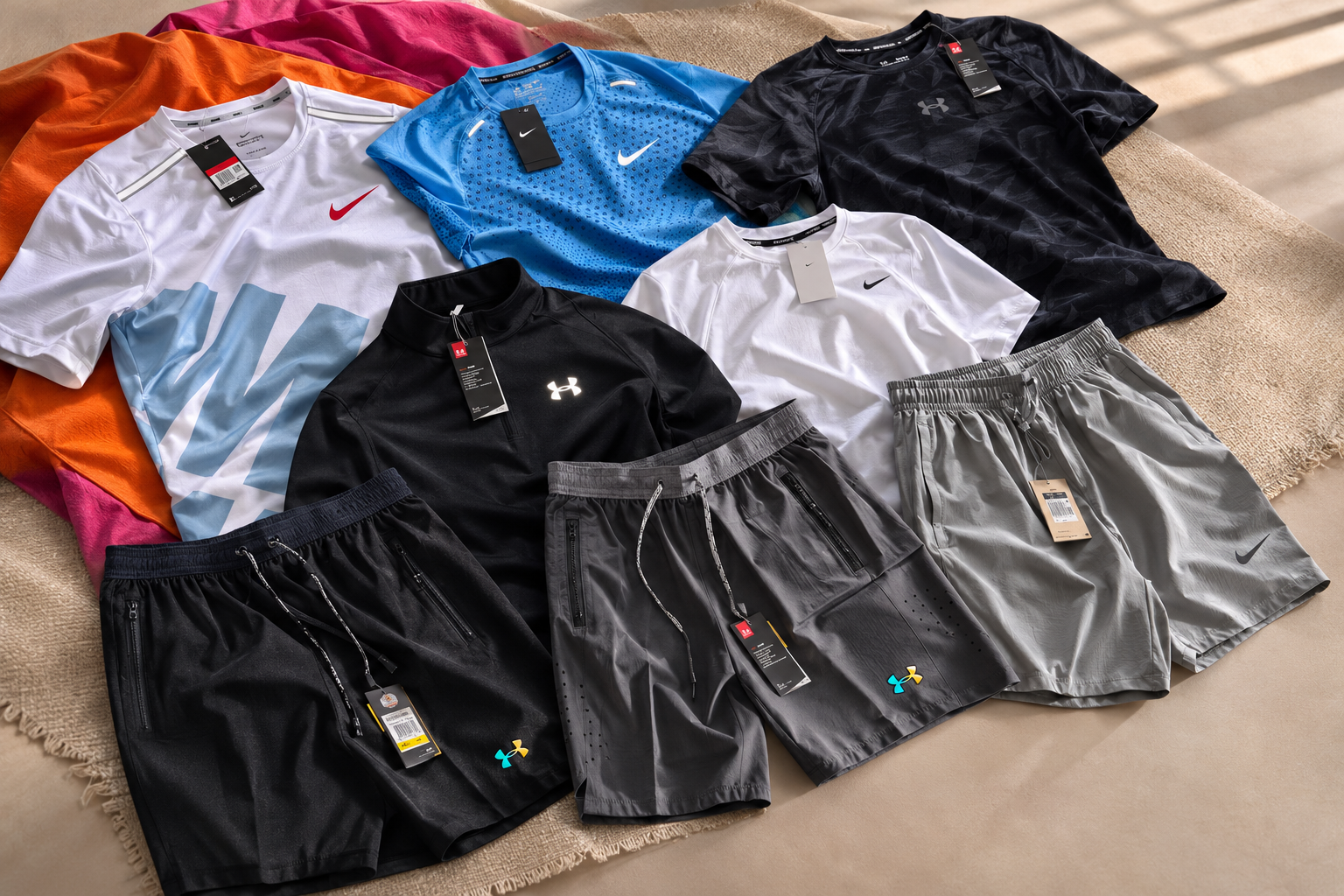
The white top serves as a brightening element in the visual, the blue short-sleeve can act as a clear color focal point, and the black and gray pieces help ground the overall tone. For a simpler look, pair a white or blue top with black, dark gray, or silver gray shorts; for a more understated layered look, combine black tops with different shades of gray shorts.
Layering and Visual Focus of Tops
The image shows various top silhouettes: short-sleeve, long-sleeve, and half-zip styles. The white short-sleeve features a large light blue geometric pattern, which already creates a strong focal point, so pair it with bottoms that have less complex prints to keep the overall look clean.
The blue short-sleeve has a regular texture on the surface, with concentrated color, suitable as the main visual in a single outfit. When paired with black or dark gray shorts, the blue stands out more; paired with silver gray shorts, the overall look becomes lighter.
The dark short-sleeve has deeper texture variations, making it visually more layered than pure black. The black long-sleeve half-zip top is simpler, with the collar, zipper, and chest logo as main details. The white long-sleeve top has a lighter visual weight, creating a clear contrast with dark shorts.
Shorts Display and Pairing Methods
The three shorts are black, dark gray, and silver gray. Black shorts paired with a black top can create variation through different fabric textures, waist drawstrings, or pocket structures; paired with a white or blue top, they allow the top color to be presented more prominently.
Dark gray shorts sit between black and silver gray, suitable for connecting bright and dark pieces. They can be paired with a white top for a soft contrast, or with a black top to maintain a dark base while avoiding the top and bottom blending completely.
Silver gray shorts are the brightest in the image, creating a clearer contrast with dark tops. Paired with a white top, the overall look is fresher, but relies on patterns or logos on the top to add visual interest.
Flat-Lay Display Arrangement Suggestions
To recreate a similar display, start by identifying one hero piece, then arrange other items with stable colors around it. The blue short-sleeve, the white short-sleeve with large pattern, or the dark top with visible texture can all serve as the center; black and gray shorts work well in the foreground to balance the visual weight.
Keep some overlap to create depth between tops and shorts, but avoid covering all key areas. Collars, sleeve lengths, waistbands, drawstrings, side pockets, and zippered pockets should be at least partially visible for comparing style differences.
Hang tags also become small dark elements in the image. For a neater look, align the tags in a consistent direction; for a more natural composition, allow slight variation, but avoid tags covering main patterns or logos.
Order for Choosing Outfits
- Determine the primary color first. White and blue are good for bright focal points; black and gray work as stable bases.
- Decide the light-dark relationship. Light tops with dark shorts give the most direct contrast; dark tops with gray shorts emphasize layering.
- Check the number of patterns. If the top has a large geometric pattern or prominent texture, choose bottoms with a simpler visual.
- Finally, observe structural details. Collars, half-zips, waistbands, drawstrings, side pockets, and zippered pockets help keep the outfit from looking monotonous.
Limitations of What the Image Can Tell
This image is good for observing color distribution, style combinations, garment overlapping, and visible structural details. Because multiple garments overlap, some hems, side panels, and details are not fully shown; wrinkles in the fabric also affect judging silhouettes. Therefore, you cannot rely solely on this image to assess fabric composition, actual comfort, full fit, sizing, durability, or functional performance.