Start with the overall color palette This flat-lay features a palette of black, gray, off-white, olive green, and navy—a low-saturation, urban-leaning streetwear color scheme. Black and gray provide visual weight, off-white brightens, olive green adds depth, and navy keeps the dark areas from feeling monotonous. The colors stay within a neutral range, so the group remains cohesive even with multiple pieces. 
Editor score 4.2 / 5
Start with the overall color palette
This flat-lay features a palette of black, gray, off-white, olive green, and navy—a low-saturation, urban-leaning streetwear color scheme. Black and gray provide visual weight, off-white brightens, olive green adds depth, and navy keeps the dark areas from feeling monotonous. The colors stay within a neutral range, so the group remains cohesive even with multiple pieces.
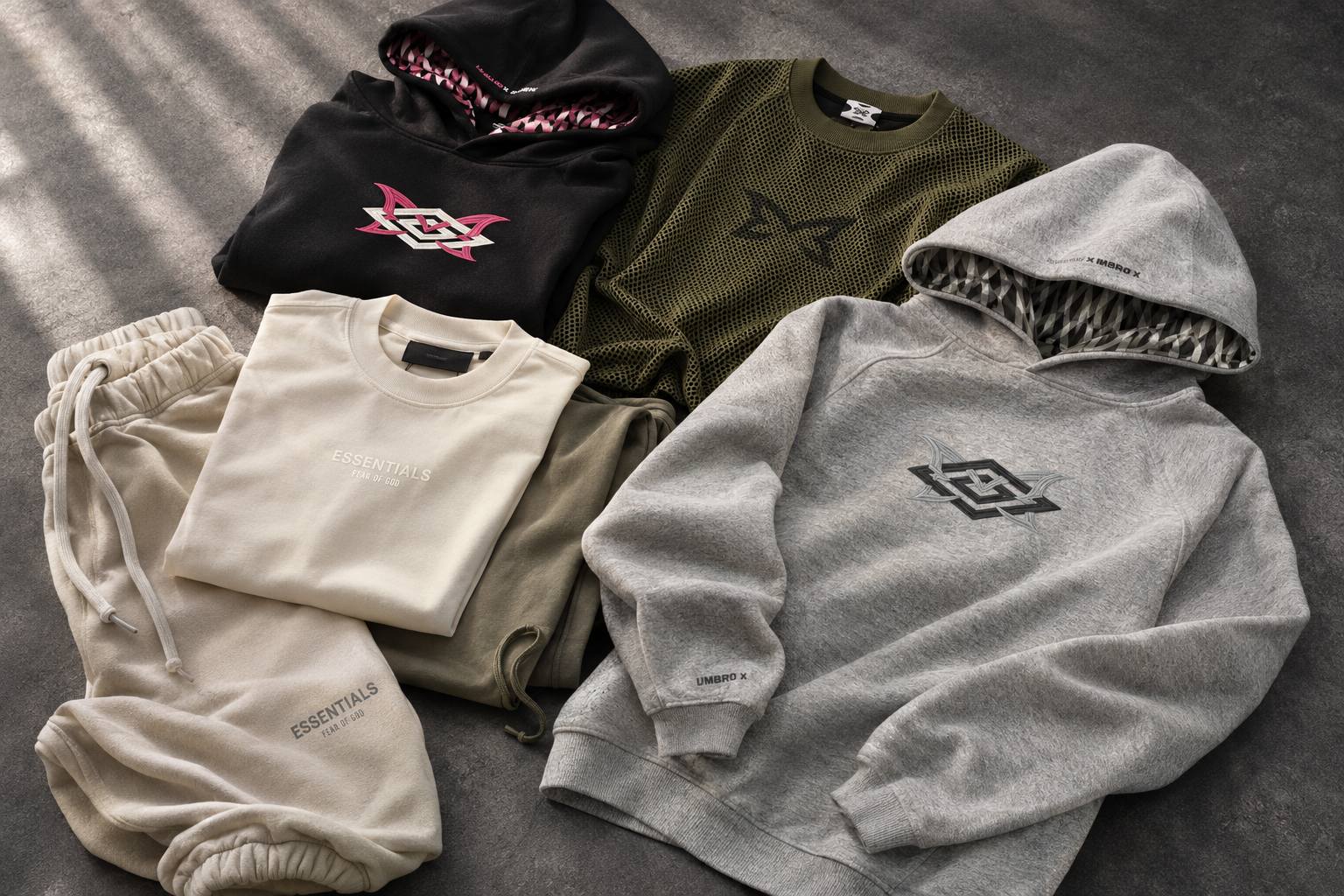
To recreate a similar effect, start with two base colors, then add a subdued accent. For example, a black hoodie with gray or off-white bottoms makes a solid core combination; an olive green tee or jacket can be a highlight, but avoid introducing too many high-contrast colors at once. The small pink branding in the image offers a subtle pop, ideal for chest graphics, sleeve details, or accessories.
Use layering to keep the flat-lay from looking flat
You don't need to fully spread out every item. Larger pieces like hoodies, jackets, and pants can form the base, while tees, shorts, or folded items go on top to create depth through different silhouettes. In the image, the light gray hoodie's hood and sleeves extend outward, and the black top overlaps with olive green pieces, creating clear light-dark contrast.
Try arranging in this order:
- Place the darkest or largest items first to anchor the composition.
- Put light tees and off-white pants in the middle or foreground for brightness.
- Expose hoods, cuffs, drawstrings, and hems to reveal recognizable details.
- Keep graphic-heavy pieces visible enough so they aren't completely covered.
- Leave small gaps of gray, off-white, or olive green between dark items for breathing room.
Specific styling directions
A black hoodie pairs well with off-white joggers; the dark-over-light relationship highlights the chest graphic while the drawstrings and cuffs add detail to the bottoms. For a more athletic streetwear vibe, swap in gray drawstring shorts and keep the black or dark gray top as the upper focal point.
An off-white tee works as a base layer under an olive green plaid hooded jacket. The light inner layer softens the weight of the plaid, and black sleeve panels can echo dark footwear or bags. An olive green mesh tee goes well with black pants; the dark bottoms let the green stand out as the clear visual center.
A navy zip-up hoodie with red chest branding is perfect for small-scale color matching. With gray shorts, the gray tones down the red's intensity; with black pants, the look becomes more understated—ideal for highlighting the logo without altering the overall low-key vibe.
What to focus on before buying or organizing
From the flat-lay, you can assess color relationships, graphic placement, external structures like hoods and cuffs, and overall coordination when layered. However, you can't determine actual wearing comfort, thickness, fit, fabric composition, durability, or functional performance from this image alone.
If you're selecting similar pieces, prioritize checking flat measurements, length, chest or waist dimensions, then examine close-up details of the neckline, cuffs, hems, zippers, and drawstrings. For dark items, also inspect stitching, pockets, and fabric texture that may be hard to see in certain lighting. This way, you separate visual styling judgment from practical wear needs, reducing bias from color and display alone.