Whether this black tote is suitable for commuting doesn't hinge on a vague "large capacity" description, but on whether the opening, base, and height can accommodate your fixed carry items. The current listing dimensions are: opening 47cm, bottom width 34cm, height 27cm, bottom depth 14cm. The page does not label it as Goyard's PM or GM, nor does it provide independent buyer conclusions for this specific link, so it's more appropriate to judge based on ac
Editor score 4.2 / 5
Whether this black tote is suitable for commuting doesn't hinge on a vague "large capacity" description, but on whether the opening, base, and height can accommodate your fixed carry items. The current listing dimensions are: opening 47cm, bottom width 34cm, height 27cm, bottom depth 14cm. The page does not label it as Goyard's PM or GM, nor does it provide independent buyer conclusions for this specific link, so it's more appropriate to judge based on actual measurements rather than guessing from series names.

First, look at the four listed dimensions
The 47cm opening indicates a wide horizontal space at the top, generally making it easier to take out and put in folders, clothing, or other commuter items compared to narrow-mouth bags. But the opening size doesn't mean the entire interior is effectively usable; a soft bag may change shape once items are loaded.
The 34cm bottom width, 14cm bottom depth, and 27cm height are the primary bases for judging how items will actually fit. The bottom dimensions reflect the bag's footprint when placed on a table or floor, and the height helps assess whether longer items can stand upright. The page doesn't provide information about inner pockets, zippered compartments, or internal reinforcement, so you cannot infer how many storage compartments it has or treat the opening size as the usable interior dimensions.
Check item by item against commuter items
It's recommended to first gather all the items you must carry daily, then use the following order to judge:
- Laptop: First measure the laptop's length, width, and thickness, then compare them with the bag's bottom width of 34cm, depth of 14cm, and height of 27cm. If the laptop's dimensions are close to the bag's bottom boundaries, you cannot judge that it will lie flat or fit stably just based on the 47cm opening.
- Folders or documents: For folders, usually focus on the longest side and stiffness. You can simulate by inserting a same-sized folder to confirm whether the opening expands easily and whether it will squeeze other items after insertion.
- Water bottle: The key is not whether the bottle fits, but whether it takes up too much bottom depth, forcing the laptop, folders, or small items to be stacked. The page doesn't state whether there's any fixed structure at the bottom, so you shouldn't assume the bottle will stay upright.
- Umbrella: For a folding umbrella, measure its length and diameter when folded; for a long-handled umbrella, use the 27cm height as an important reference. If an item is significantly taller than the bag, it may need to be placed diagonally, and the actual space occupied will exceed its physical dimensions.
- Wallet, charger, and keys: These small items usually don't determine the overall capacity, but they easily sink to the bottom. The page doesn't specify internal compartments, so it's advisable to reserve a separate pouch to avoid mixing small items with documents or a laptop.
What kind of commuting needs suit these dimensions
If your commute combination mainly consists of documents, clothing, a water bottle, and a few daily essentials, and you accept the open-top tote style for access, these external dimensions provide a basis for further verification. Its wide opening suits people who frequently put in and take out items.
If your core daily items are a fixed-size laptop, hard-shell folder, or long-handled umbrella, the focus should shift to the bottom and height rather than just the 47cm opening. Especially when an item approaches the 14cm bottom depth or 27cm height, you should simulate with actual objects and not treat the listed dimensions as the usable interior dimensions.
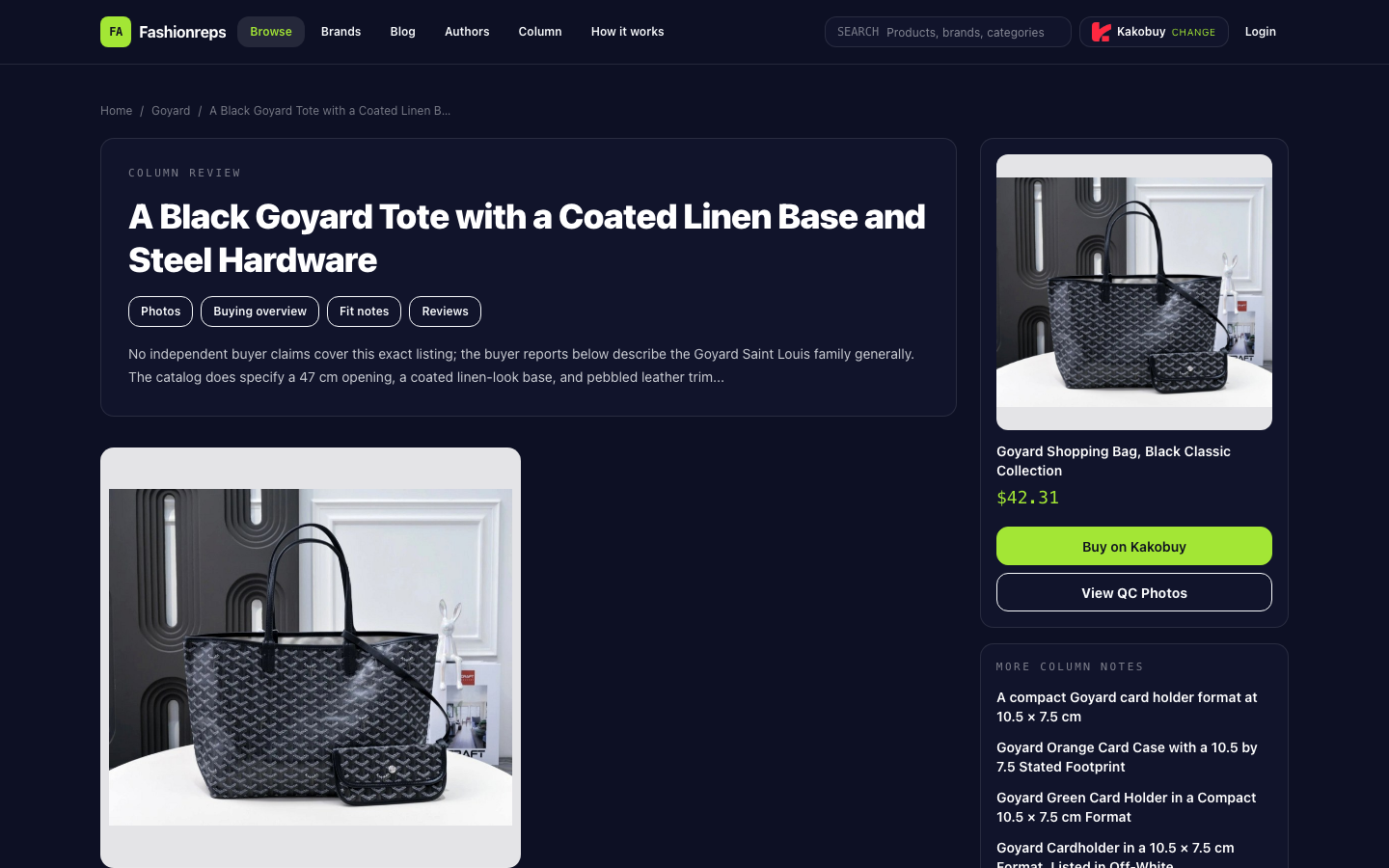
The page also describes the bag as having a coated linen-textured base, grained leather trim, and steel hardware, and mentions the listing states the bottom has a textured and semi-matte finish. These descriptions are product listing information; durability feedback about the series is at the series level and cannot replace physical inspection of this specific link. Currently, there are no independent buyer reports covering this exact link, so we cannot confirm trim wear, hardware condition, or long-term load-bearing performance.
Measurement method before ordering
- Find an existing commuter tote you own and load it with all the items you must carry daily.
- Measure the longest side, widest point, highest point, and bottom occupied depth after it's full.
- Compare these measurements separately with the 47cm opening, 34cm bottom width, 27cm height, and 14cm bottom depth; don't compare just one maximum number.
- Use cardboard or a soft measuring tape to simulate a 34cm by 14cm bottom area inside your existing bag, and observe whether the laptop, folder, and water bottle must be stacked.
- Before ordering, review the product-level QC photos for this item, focusing on the opening, bottom, leather trim, hardware, and interior; don't use photos of other styles or series as evidence for this item.
- On the shopping agent page, reconfirm the current item status, fees, and international shipping. The reference price in the listing is not the final payment amount; service fees and international shipping must be confirmed on the agent platform's checkout page.
The final judgment can be simple: if your daily items can be reasonably arranged within the simulated range of 34cm width, 14cm depth, and 27cm height, and you accept the limitations of no explicit PM or GM label and no independent buyer feedback for this item, then this bag is worth further verification; if you need exact series size correspondence, fixed internal compartments, or proven durability, the current evidence is insufficient to justify a direct order.