This flat lay brings knitwear, shirts, and basic tops together on the same wooden tabletop, highlighting the layering changes among black, navy, pink, blue, olive green, and black. For those looking to organize their autumn/winter wardrobe or plan clothing displays, you can draw inspiration from this styling approach in three areas: color grouping, texture contrast, and visual focus. ## Color Relationships in the Shot Black and navy knitwear form a more subdued base, suitable for placing at the
Editor score 4.2 / 5
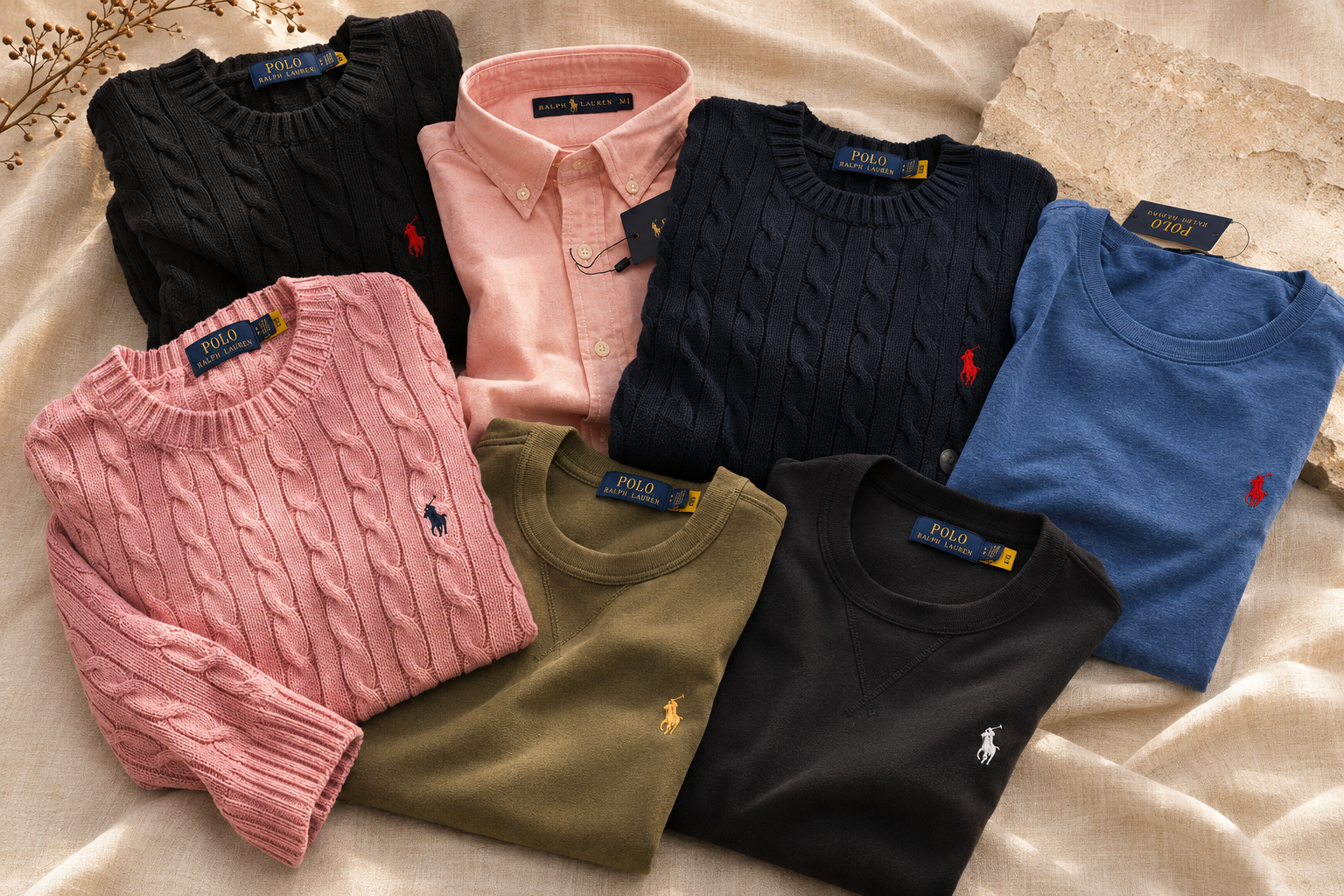
This flat lay brings knitwear, shirts, and basic tops together on the same wooden tabletop, highlighting the layering changes among black, navy, pink, blue, olive green, and black. For those looking to organize their autumn/winter wardrobe or plan clothing displays, you can draw inspiration from this styling approach in three areas: color grouping, texture contrast, and visual focus.
Color Relationships in the Shot
Black and navy knitwear form a more subdued base, suitable for placing at the top or periphery of the frame. They anchor the overall color scheme and prevent the arrangement from looking scattered when multiple garments are shown together. Pink cable-knit sweater and pink button-down shirt are placed in more prominent areas, adding a soft brightness shift to the dark pieces and giving the scene a seasonal feel.
The blue crewneck top serves as a cool color transition. It is lighter than black yet coordinates well with the navy knitwear. The olive green top provides a natural mid-tone, preventing too direct a contrast between pink and dark colors. For everyday outfits, pink can be the visual focus, paired with black, navy, or olive green bottoms; for a more restrained look, choose a blue top with dark knit layers.
Knit Texture and Basics Pairing
The knitwear pieces in the shot feature pronounced three-dimensional cable textures and ribbed collars, which already create strong visual interest. Therefore, when styling, other pieces can have flatter surfaces, like shirts or crewneck tops, so that layering comes from fabric and silhouette rather than competing for attention.
The pink cable-knit sweater's texture is most visible, making it ideal as the main piece of an outfit. Black and navy cable-knit sweaters are better as outer layers or main colors, especially with light-colored shirts peeking out at collar, cuffs, or hem. The clean surface of basic tops balances the knit texture, bringing the overall look closer to casual everyday style.
Small equestrian motifs appear on some tops, serving as low-area decoration. They don't require additional large-scale patterns; pairing with solid pants, simple shoes, or plain jackets helps maintain the clean feel seen in the shot.
Flat Lay Composition Method
This image uses an overlapping arrangement: knitwear is spread out in larger areas, with shirts and basic tops interspersed in the middle and below, so sleeves, collars, and chest areas are offset from each other. This showcases different styles while avoiding all collars being on the same horizontal line, giving the composition more rhythm.
To arrange a similar display, follow this order:
- Start by placing one or two dark pieces to establish a stable area.
- Then add brighter colors like pink or blue to create a focal point.
- Offset shirt collars and knit collars to preserve the identity of different necklines.
- Lay garments with obvious texture flat so that cable patterns, ribbed edges, and chest motifs are fully visible.
- Tuck sleeves inward or stack them naturally to reduce excessive overlapping of edge lines.
The wooden tabletop and light fabric background provide a warm neutral base. They don't compete strongly with the clothing colors and help set off the black, blue, and pink blocks. When photographing similar displays at home, keep the background low contrast and leave small gaps between garments to make colors and textures easier to see.
Styling Directions to Reference Directly
The first direction is a dark knit sweater paired with a pink shirt. Use the pink shirt as an inner layer, exposing only the collar and front placket area, then layer a black or navy knit sweater over it to keep the soft color contained within a smaller range.
The second direction is a pink cable-knit sweater with dark basics. The pink knit texture is already prominent, so choose black, charcoal, or navy for bottoms or outerwear to maintain visual balance between top and bottom.
The third direction is a low-saturation combination of olive green and blue. Neither color relies on high brightness to attract attention, making it suitable for a more natural, casual color scheme. Adding black accessories will sharpen the overall silhouette.
The fourth direction is tonal layering with different shades of the same color. A navy knit sweater can be combined with a blue crewneck top, using color depth rather than strong contrast to create layers; black pieces can serve as outer layers or bottoms to help anchor the overall visual weight.

This flat lay is suitable for observing the clothing's color distribution, knit textures, collar structures, chest motifs, and overall display relationships. Since the image uses a flat lay perspective, it cannot show fit variations when actually worn, and it does not include information on fabric composition, thickness, hand feel, size accuracy, or durability performance.